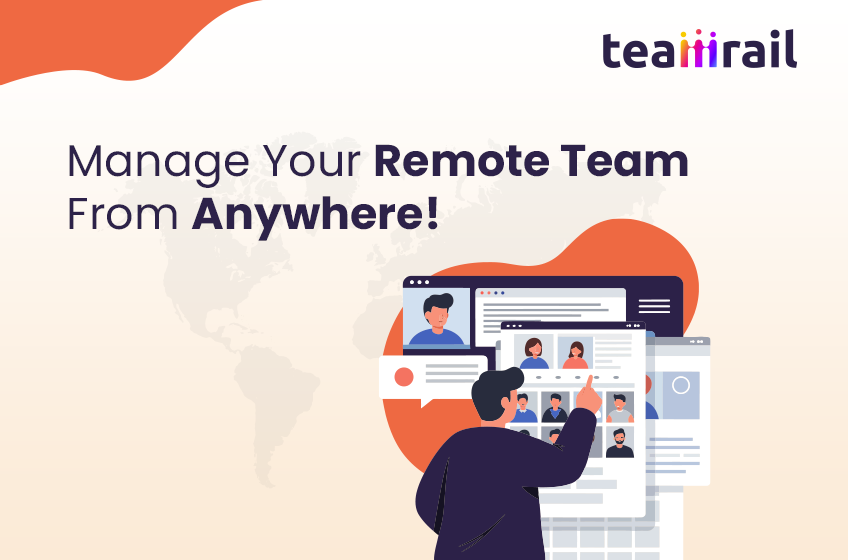
Remote work is no longer just an experiment. It has become a vital operating model for startups, small and medium-sized enterprises, and global organizations. Distributed teams now work together across time zones, continents, and cultures, making flexibility a key advantage. While remote work offers flexibility and boosts productivity, it also introduces new operational challenges. How do you track attendance when employees are in different locations? How do HR teams keep things transparent, ensure accountability, and keep teams connected without micromanaging? This is where a modern employee management system is necessary. A cloud-based employee management platform helps organizations bring HR operations together, automate routine tasks, and keep track of workforce performance, regardless of where employees are based.
In this article, we will look at how a cloud-based employee management system supports remote teams, the challenges it addresses, and how modern platforms like Teamrail help businesses manage distributed workforces more effectively.
What's in the blog-
What Is a Cloud-Based Employee Management System?
A cloud-based employee management system for remote teams is a centralized HR platform hosted online. It allows businesses to manage employees, track performance, monitor attendance, handle payroll, and maintain compliance — all from one secure dashboard.
Because it’s cloud-based:
- It works from anywhere
- It updates in real time
- It scales with your team
- It integrates with other business tools
Instead of relying on spreadsheets, email chains, or fragmented tools, companies can manage the entire employee lifecycle within a single system.
Key functions typically include the following:
- Employee data management
- Attendance and time tracking
- Leave and absence management
- Task and performance monitoring
- Document storage and HR records
- Reporting and analytics
When these processes are unified in one platform, organizations gain a clearer picture of workforce activity and productivity.
Common Challenges in Managing Remote Employees
Before diving into the solutions, let’s discuss some of the actual challenges.
- Lack of Visibility
Managers face challenges in understanding:
- Who is working on what?
- Attendance patterns of the employees
- Productivity levels of the employees
- Leaves of the employees
This leads to miscommunication and missed deadlines.
- Scattered HR Data
Employee information is stored in:
- Email threads
- Shared drives
- Spreadsheets
- Messaging apps
This increases compliance risk and wastes time.
- Complicated Remote Onboarding
Hiring remote employees is easy, but onboarding them is not. Documents, contracts, policies, and task tracking need coordination. Without automation, HR teams get distracted.
- Payroll & Compliance Complexity
Managing the payroll of remote employees involves:
- Different tax laws in different countries
- Different labor laws in different countries
- Different currencies
- Benefits management
Mistakes can be expensive!
- Limited Performance Tracking
Remote employees need clarity in understanding:
- Structured goal setting
- Performance reviews
- Feedback
As a result, the level of engagement also decreases.
Why Remote Teams Need a Modern Employee Management System
Remote teams require a better infrastructure than regular offices. In the absence of a centralized environment, any organization tends to face friction in operations. A good employee management system acts as an infrastructure to support remote teams. There are some reasons why employee management systems are used in remote teams:
- Centralized Workforce Data
In a remote team, there are usually multiple regions and departments involved. If a centralized solution is not used, HR data is usually scattered all over the place, in files, in different tools, and on different communication channels.
An advanced employee management solution ensures that all employee data, documents, and HR updates are kept in one place.
- Real-Time Visibility
Managers cannot rely on the physical presence of the team to determine their productivity. The cloud-based system can provide real-time data on attendance, working hours, and performance.
This will enable the manager to make decisions without promoting the culture of constant monitoring.
- Improved Collaboration
Employee management tools sometimes have the capacity to connect to other tools like communication and project tools, which helps in improving collaboration for remote workers.
- Scalability for Growing Teams
For startups and growing companies, their workforce grows rapidly, and it becomes hard to manage numerous remote workers. A scalable employee management tool helps companies to manage their workforce even when they grow rapidly.
Key Features of a Cloud-Based Employee Management System
To effectively manage their remote employees, organizations need tools that can simplify their HR operations and provide better visibility of their workforce.
Here are the key features of modern tools that can help organizations manage their employees effectively.
- Digital Employee Records
A good employee management system can keep all the records of employees in one place.
These records include:
- Personal records
- Employment contracts
- HR records
- Performance records
- Role and department records
Managers can access their employees’ records anywhere, anytime, without having to search for the records manually.
- Attendance and Time Tracking
In a remote organization, time tracking is important. A cloud-based system can provide employees with the ability to record their working hours, attendance, and shifts anywhere, anytime.
Managers can get better insights into their employees’ work patterns, while employees can enjoy a transparent system of attendance and time tracking.
- Leave and Absence Management
Managing leaves via emails or spreadsheets can sometimes get confusing. New technology has made it easy to simplify the entire process.
- Performance Monitoring
The best way to manage a virtual team is to have goals and objectives already set up. Employee management software has made it easy to monitor employee productivity via performance monitoring.
- HR Analytics and Reports
It is very important to have data-driven information to enable businesses to make effective decisions regarding their workforce. The best way to do this is via attendance trends, productivity levels, and employee engagement reports made possible by modern technology.
How Teamrail Supports Remote Workforce Management
Managing remote teams requires more than just basic HR tools. Businesses need systems that are designed for modern, distributed workplaces. Teamrail offers a comprehensive employee management system built to support organizations operating across locations and time zones.
The platform combines multiple HR functions into one cloud-based solution, helping businesses streamline operations while maintaining workforce visibility.
With Teamrail, organizations can:
- Automate shift planning
- Manage employee records digitally
- Track attendance and working hours in real time
- Automate leave management processes
- Monitor employee activity and productivity
- Generate insightful workforce reports
Because the platform is cloud-based, both employees and managers can access the system securely from anywhere. This flexibility makes it ideal for companies with remote or hybrid teams. By reducing administrative complexity, Teamrail allows HR teams to focus on strategic initiatives rather than repetitive tasks.
Key Benefits for Businesses Using an Employee Management System
Organizations can benefit significantly by implementing a cloud-based HR system for their businesses.
- Increased Operational Efficiency
By automating HR activities, businesses can reduce the manual effort associated with HR operations, such as attendance, leave, etc.
- Better Workforce Transparency
Managers can view their employees’ work patterns, availability, etc., without having to rely on assumptions, which can create mistrust between the management and the employees.
- Improved Employee Experience
Employees also benefit greatly by having access to such HR tools, which can simplify their operations, such as applying for leaves, etc.
- Stronger Compliance and Data Security
Organizations can ensure better security for their employees’ data, which is crucial for businesses with international operations.
- Scalability for Growing Companies
As businesses expand their operations, managing HR operations manually can become increasingly cumbersome, but an employee management system can be scalable for such businesses.
The Future of Employee Management for Remote Work
Remote work is likely to be a major part of the global workforce in the future. As such, employee management technology will continue to evolve. Some trends are already emerging to determine the future of employee management technology.
- AI-Powered Employee Insights
Advanced analytics technology will be available to help HR management to gain insights into employee productivity patterns and predict employee turnover.
- More Automation in Employee Management
HR processes like employee onboarding, performance tracking, and document management will be more automated.
- Integration of Employee Management Ecosystem
Employee management technology will be integrated with other technologies like project management software and financial management technology.
- Focus on Employee Wellbeing
Future systems will also emphasize employee engagement, mental wellbeing, and work-life balance for remote teams.
Organizations that adopt modern HR technology today will be better prepared for these future developments.
Why Businesses Are Moving Towards Cloud-Based HR Platforms
The traditional way of conducting HR activities was developed for office-based companies. However, the rise of remote work has changed the traditional way of conducting business. A modern employee management system helps companies adapt to these changes and still run their business efficiently. A cloud-based HR platform helps companies focus on the essential aspect of their business: creating a productive and engaged workforce.
For startups, SMEs, and companies with remote teams, using a cloud-based employee management system is not just a suggestion; it’s a necessity. A platform like Teamrail offers the tools required to manage employees in the modern remote work environment.
If you’re a company looking to improve how you manage your remote teams, you should experience how a modern HR platform works in real life.